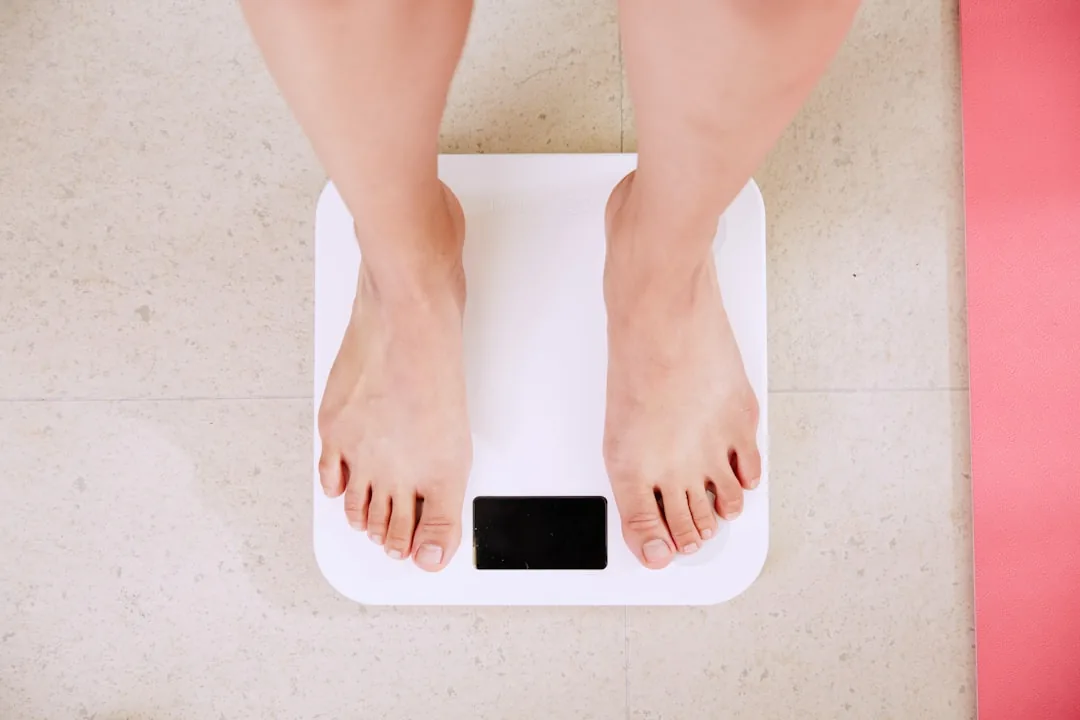
How to Accurately Convert Pounds to Kilograms for American Body Weight
Convert pounds to kilograms accurately for American body weight tracking. The exact factor is 1 lb = 0.45359237 kg. Includes a common-weight reference table, the formula, and common mistakes to avoid.
By The UnitFig Editorial Team · August 9, 2026 · reviewed against NIST and SI reference sources
Why Track Body Weight in Both Pounds and Kilograms?
American scales, gym equipment, and doctors usually display pounds, while many fitness apps, international health records, and research studies use kilograms. If you are logging weight for fitness, medical visits, or comparing with friends abroad, you need a reliable way to move between the two.
The relationship is fixed by international agreement, so there is no ambiguity about the math. One avoirdupois pound is defined as exactly 0.45359237 kilograms. This is the same standard used by NIST in the United States, so a conversion done correctly today will be identical to one done ten years from now.
The Exact Conversion Formula
To convert pounds to kilograms, multiply the number of pounds by 0.45359237.
kg = lbs × 0.45359237
For example, 150 lbs × 0.45359237 = 68.0389 kg. To go the other way, divide by the same factor: 68.0389 kg ÷ 0.45359237 = 150 lbs. You can run either direction instantly with our kg to lbs converter.
In daily use you rarely need all eight decimals. For fitness tracking, rounding to one or two decimal places (68.0 kg or 68.04 kg) is perfectly accurate. Keep full precision only for medical records or scientific work.
Common American Body Weights in Kilograms
These are the conversions Americans ask about most often, computed from the exact factor above. Bookmark this table for quick reference:
Quick Weight Reference Table (lbs → kg)
120 lbs = 54.43 kg — common female fitness starting weight
130 lbs = 58.97 kg — common female maintenance weight
140 lbs = 63.50 kg — average American woman reference point
150 lbs = 68.04 kg — common adult fitness goal
160 lbs = 72.57 kg — common male fitness starting weight
180 lbs = 81.65 kg — common male gym training weight
200 lbs = 90.72 kg — common male bodybuilding weight
For any other value, our 150 lbs to kg converter and 140 lbs to kg guide show the exact math step by step.
Common Mistakes When Converting Body Weight
The most frequent error is using 2.2 as a rounded factor in both directions. 1 kg is 2.20462 lbs, so multiplying kilograms by 2.2 works as an estimate, but dividing pounds by 2.2 is not the same as multiplying by 0.45359237. For exact results, always use 0.45359237 or our converter.
A second mistake is confusing the avoirdupois pound (used for body weight) with the troy pound (used for precious metals). One troy pound is only 0.37324 kg, a difference of about 21%. Body weight, food, and gym equipment always use the avoirdupois pound.
Finally, do not round the factor before multiplying. Truncating 0.45359237 to 0.45 shifts a 200 lb weight by about 0.7 kg, which matters when you are tracking small weekly changes. Learn more in our pounds vs kilograms guide.
How to Track Progress Accurately
Weigh yourself at the same time of day (ideally morning, after using the bathroom, before eating) on a flat, hard surface. Record the number in pounds or kilograms and convert consistently — do not switch between rounded and exact factors. Weekly averages smooth out daily water fluctuations better than single readings.
If you use a smart scale that reports both units, trust the raw value it displays; the conversion is done internally by the same 0.45359237 factor.
Frequently Asked Questions
How many kg is 1 pound?
One avoirdupois pound is exactly 0.45359237 kilograms, by international definition (NIST SP 330).
How do I convert my weight from lbs to kg?
Multiply your weight in pounds by 0.45359237. Example: 150 lbs × 0.45359237 = 68.04 kg.
Is 2.2 lbs equal to 1 kg?
Close, but not exact. 1 kg = 2.20462 lbs. Using 2.2 is fine for estimates; use 0.45359237 for exact results.
Why does my doctor use kg when my scale shows lbs?
Medical records in the US commonly use kilograms because medicine and science use SI units. The conversion uses the same exact factor.
What is 200 lbs in kg?
200 lbs equals exactly 90.7185 kg (200 × 0.45359237).
Try the Calculator
kg to lbs Converter
Get instant, accurate results with our free converter.
Quick Summary
Converting pounds to kilograms for body weight tracking is exact and simple: multiply by 0.45359237. Use the quick reference table for common weights, avoid rounded-factor and troy-pound mistakes, and convert consistently for meaningful progress tracking.
Related Guide
Pounds vs Kilograms: Which Should You Use?
Pounds and kilograms both measure mass but belong to different systems. Learn the exact relationship and when each unit is the right choice.
Read Full Guide →More in Weight Loss & Fitness
70 kg to lbs: Convert 70 Kilograms to Pounds for Fitness and Health
Convert 70 kg to lbs with the exact formula. 70 kilograms equals 154.32 pounds, a key weight for fitness tracking, medical records, and travel.
80 kg to lbs: Convert 80 Kilograms to Pounds for Training and Travel
Convert 80 kg to lbs with the exact formula. 80 kilograms equals 176.37 pounds, a common weight for strength training, body weight, and shipping.
100 kg to lbs: Convert 100 Kilograms to Pounds for Lifting
Convert 100 kg to lbs with the exact formula. 100 kilograms equals 220.46 pounds, a key weight for heavy lifting, freight, and body weight records.
60 kg to lbs: Convert 60 Kilograms to Pounds for Fitness and Travel
Convert 60 kg to lbs with the exact formula. 60 kilograms equals 132.28 pounds, a common weight for fitness tracking, body weight, and luggage.
50 kg to lbs: Convert 50 Kilograms to Pounds for Health and Shipping
Convert 50 kg to lbs with the exact formula. 50 kilograms equals 110.23 pounds, a common weight for body weight, fitness, and shipping limits.
Convert Another Unit
Disclaimer
Unit conversions on this site use internationally recognized, fixed conversion factors (for example, 1 inch = 2.54 cm, 1 pound = 0.45359237 kg, 1 °F = (°C × 9/5) + 32). They are provided for general, informational, and educational use. For applications where accuracy is critical — such as medical dosing, engineering, scientific research, trade, or legal compliance — always verify results against authoritative sources such as the U.S. National Institute of Standards and Technology (NIST) and the official International System of Units (SI) brochure, and follow any applicable local standards.
Exact Constants & Authoritative Sources
Every conversion on this page uses the fixed, internationally agreed constants below — drawn from NIST and the SI Brochure. No values are estimated or rounded as if exact. See the full list on our Sources & Standards page.
- EXACT1 pound (lb, avoirdupois) = 0.45359237 kilograms (exact)
- EXACT1 ounce (oz, avoirdupois) = 28.349523125 grams (exact, 1/16 lb)
- EXACT1 stone (st) = 6.35029318 kilograms (exact, 14 lb)
- EXACT1 short ton (US) = 907.18474 kilograms (exact, 2000 lb)
Common Pitfalls & How to Avoid Them
Mass vs. weight
The pound and kilogram are units of MASS, not force. On Earth, mass and "weight" read the same number in practice, but a 70 kg mass weighs less on the Moon. UnitFig converts mass; for scientific force you need newtons (1 lbf = 4.4482216152605 N, exact).
Avoirdupois vs. troy ounce
Cooking and body weight use the avoirdupois ounce (28.349523125 g). Gold and precious metals use the troy ounce (31.1034768 g). Never mix them — the error is about 10%.
Rounding the factor
Using 2.2 instead of the exact 2.20462262 overstates small errors at large values. For medical dosing or competition weight classes, keep the full factor or use a converter.
A unit-conversion reference site has no manufacturer-specific or device calibration parameters, so "layered tuning" does not apply here. The only real error-handling is input validation: the converter rejects non-numeric, empty, or out-of-range entries and shows a clear message, then falls back to exact constants above. No estimated or rounded figures are ever presented as exact.
Authoritative sources for this page
- NIST (U.S. National Institute of Standards and Technology) — NIST SP 330 — The International System of Units (SI), 2019 edition
Last Updated 2026 | This article was reviewed for accuracy